
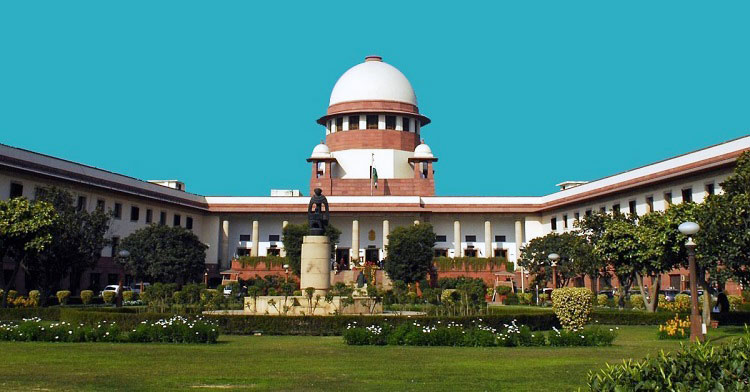

NEW DELHI — The Supreme Court on Friday asked the Centre to reconsider sweeping restrictions on Delhi Metro and railway services ahead of the Cockroach Janata Party’s (CJP) proposed October 10 protest at Jantar Mantar, stressing that security measures should not bring public transport to a complete halt.
A bench headed by Chief Justice of India Surya Kant, comprising Justices Joymalya Bagchi and V. Mohana, expressed concern over the proposed closure of entry and exit gates at 57 Metro stations and the cancellation of trains bound for New Delhi and Hazrat Nizamuddin railway stations.
The court said restrictions imposed to maintain law and order must be proportionate to the situation and should minimise inconvenience to ordinary citizens who depend on public transport for work, education, healthcare and other essential activities.
The bench made it clear that Metro services could not be completely prohibited and asked the authorities to explore regulated arrangements that would address security concerns without unnecessarily disrupting commuters.
“We make it clear that there shall be no complete prohibition on movement of Metro trains,” the court said, according to its reported proceedings.
The Chief Justice underscored the importance of proportionality while allowing authorities to take necessary preventive measures.
The bench noted that commuters travelling from Gurugram, Greater Noida, east Delhi, south Delhi and other parts of the National Capital Region would be affected by restrictions on Metro and railway services.

It also pointed out that students, employees, senior citizens, patients and court staff relied on public transport and could face serious difficulties if services were suspended altogether.
Justice Bagchi observed that reducing the frequency of trains could amount to regulation, whereas closing services entirely would constitute a prohibition. Justice Mohana also expressed concern over reported restrictions on road movement and stressed that security measures should be implemented proportionately.
Solicitor General Tushar Mehta, appearing for the Centre, submitted that stringent restrictions could sometimes be necessary to maintain law and order, depending on the prevailing circumstances.
Defending the security arrangements, Mehta referred to a previous protest during which, he alleged, demonstrators had initially obtained permission for a one-day programme but continued their sit-in for 17 days.
He further alleged that protesters had subsequently attempted to march towards Parliament, leading to clashes in which more than 200 police personnel were injured. He also alleged that women police personnel had been molested during the confrontation.
Mehta maintained that the restrictions were intended to prevent a recurrence of such incidents. These allegations were presented by the Solicitor General in court and were not findings by the bench.
The proposed restrictions come ahead of the CJP’s October 10 demonstration at Jantar Mantar, where protesters plan to demand the resignation of Chief Election Commissioner Gyanesh Kumar over allegations of “vote theft” and concerns about the revision of electoral rolls.
Delhi Police reportedly denied permission for the demonstration, citing the short notice given by organisers.
The Supreme Court also questioned whether Jantar Mantar was suitable for large gatherings, observing that its limited space and geographical location could create logistical difficulties.
The bench suggested that the authorities consider an alternative venue that could accommodate larger gatherings while providing adequate facilities, including sanitation, food arrangements and emergency medical access.
The court further directed the authorities to issue public advisories on Metro and railway restrictions and provide timely information about road closures, barricades, traffic diversions and alternative routes. It recorded the Solicitor General’s assurance that he would ask the concerned authorities to reconsider the restrictions and allow services to operate in a regulated manner.
The bench clarified that it was not deciding whether the proposed protest should be permitted, keeping the question of permission separate from its immediate concern over the impact of transport restrictions on the general public.
The court also considered a report from a high-powered committee constituted to examine issues arising from earlier protests. After being informed that the committee had begun work but required certain facilities to discharge its responsibilities, the bench directed the government to extend the necessary cooperation.