
NEW DELHI — Only 16.6 per cent of Class 3 children in rural Jammu and Kashmir can read a Class 2-level text, while the proportion rises to just 37.7 per cent among Class 5 students, according to the Annual Status of Education Report (ASER) 2024.
The findings highlight persistent gaps in foundational learning across rural Jammu and Kashmir, with more than eight out of every 10 Class 3 children unable to read a text intended for students one grade below them.
Against this backdrop, Chief Minister Omar Abdullah on Saturday called for an education system that moves beyond examination results and equips children with critical thinking, digital literacy, creativity and practical skills.
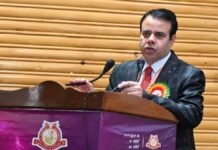
Addressing the School Leader of the Year 2026 Summit and Awards in New Delhi, Abdullah said education must prepare students for challenges beyond classrooms and examinations and enable them to adapt to a rapidly changing world.
The ASER findings show that the learning gap persists as children progress through primary school. Only 37.7 per cent of rural Class 5 students in Jammu and Kashmir could read a Class 2-level text in 2024, indicating that many students continue to struggle with basic reading skills in the higher primary grades.
The results underscore the importance of strengthening foundational learning before students advance to higher classes, where reading comprehension becomes essential across subjects.

Abdullah said academic achievement alone was insufficient to prepare young people for the future and stressed the need to develop students’ ability to think independently, solve problems, communicate effectively and respond to changing circumstances.
Highlighting the growing role of artificial intelligence in education, he said technology could help improve learning outcomes, personalise teaching and support educators in addressing individual learning needs.
He cautioned, however, that technology should complement rather than replace teachers, whose role remains central to children’s intellectual and personal development.
The Chief Minister also highlighted the responsibilities of principals and headteachers in improving educational standards, saying school leadership extended beyond administrative functions to shaping institutional culture, students’ aspirations and the overall learning environment.
He called for continuous professional development for teachers and school leaders, including exposure to innovative teaching methods, exchanges of best practices and collaboration among educational institutions.
Abdullah further emphasised the need to address disparities in access to quality education, saying children in rural, remote and underserved communities should have opportunities comparable to those available in urban institutions.
He called for coordinated efforts involving governments, educators, institutions, parents and communities to address children’s academic and developmental needs. He also advocated greater collaboration between Indian and international educational institutions to promote innovation and improve teaching standards.
The Chief Minister’s remarks come as Jammu and Kashmir faces the dual challenge of improving basic learning outcomes while preparing students to use emerging technologies and acquire future-ready skills.
Although he called for a broader shift in educational priorities, no specific implementation timeline or new policy measures to address the foundational learning gaps were announced during his address.
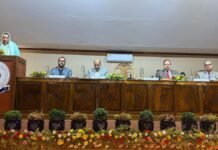
The summit brought together school principals, educationists, institutional heads and representatives of Indian and international universities to discuss leadership, innovation and emerging challenges in school education.
Abdullah also felicitated several heads of educational institutions for their contributions to the education sector.
Follow Us
The Kashmir Pulse is now on Google News. Subscribe our Telegram channel and Follow our WhatsApp channel for timely news updates!