
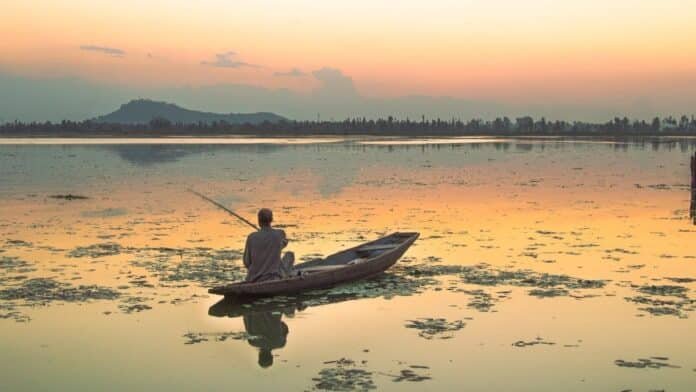
SRINAGAR — Dal Lake recorded only eight fish species during a six-month survey, with researchers reporting a decline in fish diversity and calling for urgent conservation measures.
The study, published in the July 2026 issue of the Journal of Emerging Technologies and Innovative Research (JETIR), examined fish diversity and the conservation status of the iconic Kashmir lake, according to details accessed by the news agency KNO.
Researchers from Government Degree College Bemina and Government Degree College Uttersoo collected fish samples every fortnight between January and June 2025 from three locations — Hazratbal, Nehru Park and Nishat — with the assistance of local fishermen.
Only eight species were recorded during the survey, compared with more than 14 species reported in earlier studies, the researchers said.
The survey found Cyprinus carpio specularis to be the most abundant species across all three sampling sites, followed by Cyprinus carpio communis.

Native snow trout species, including Schizothorax niger and Schizothorax curvifrons, were among the least abundant fish recorded.
The researchers recorded seven Schizothorax niger at both Hazratbal and Nehru Park and five at Nishat. For Schizothorax curvifrons, the corresponding numbers were four, seven and four.
The study also recorded Carassius carassius, Crossochellus diplochilus, Puntius conchonius and Gambusia holbrooki at the three sampling locations.
Researchers said several fish species reported in previous studies were not found during their survey, which they described as an indication of declining ichthyofaunal diversity in the lake.
Decline linked to multiple pressures
The study attributed the reported decline to several pressures, including untreated sewage, agricultural runoff, eutrophication, introduction of exotic species, overfishing and loss of fish breeding grounds.

It also raised concern over the reported presence of alligator gar, an invasive predatory fish, saying the species could prey on fry and fingerlings of native Schizothorax species.
The researchers recommended controlling untreated sewage and agricultural runoff entering Dal Lake, managing aquatic weeds and regulating human activities around the urban water body.
They also called for restocking native and endemic fish species, preventing the introduction of exotic invasive species and imposing measures against overfishing.
The study noted that fish are an important component of Dal Lake’s ecosystem as well as a source of food and income for communities dependent on fisheries.
The researchers said the lake’s fish diversity had been substantially affected and called for immediate conservation measures to prevent further loss of aquatic biodiversity.
Follow Us
The Kashmir Pulse is now on Google News. Subscribe our Telegram channel and Follow our WhatsApp channel for timely news updates!