
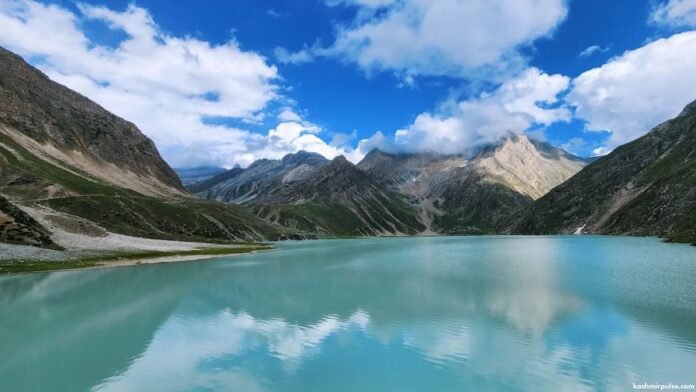
SRINAGAR — Environmental groups and concerned citizens have challenged Forest Minister Altaf Ahmad Kaloo’s assurance that Sheshnag Lake is safe, demanding an immediate halt to excavation and an independent scientific assessment of work near the fragile glacial lake.
Kaloo had said a departmental team inspected the site and found that no soil had entered the lake. He had also maintained that the work was being carried out along the existing Amarnath Yatra track. However, environmental campaigners say such assurances do not answer key questions about the impact of heavy machinery, slope cutting, debris disposal and the permissions governing the work.
The Group of Concerned Citizens (GCC) has warned that construction activity around Sheshnag and adjoining glaciers could increase the risk of landslides, flash floods and glacial lake outburst floods (GLOFs), with potential consequences for downstream communities, drinking water supplies and irrigation. It has called for construction and deployment of heavy machinery to be suspended until comprehensive geotechnical, hydrological and environmental assessments are completed.
The Jammu and Kashmir Climate Action Group, headed by environmental activist Dr Raja Muzaffar Bhat, has also sought an independent investigation, public disclosure of statutory permissions and examination of construction debris disposal. The group warned that excavation, slope cutting and unscientific interventions could disturb natural drainage and cause lasting damage to the lake’s catchment.

Critics have questioned whether a departmental inspection and assurance that no soil entered the water are sufficient to establish that the surrounding ecosystem has not been affected. They have demanded that the government make the project details, clearances and scientific assessments public, rather than rely solely on official assurances.
The controversy has intensified after reports identified Sheshnag among Jammu and Kashmir’s high-risk glacial lakes. Environmental groups say the issue is not opposition to facilities for pilgrims, but whether infrastructure work in a sensitive Himalayan zone is being undertaken on the basis of independent scientific scrutiny and adequate safeguards.
The Border Roads Organisation has maintained that its work is confined to existing tracks and is intended to improve pilgrim safety. The demand for an independent assessment, however, remains central to the concerns raised by environmental groups and citizens.
Follow Us
The Kashmir Pulse is now on Google News. Subscribe our Telegram channel and Follow our WhatsApp channel for timely news updates!