

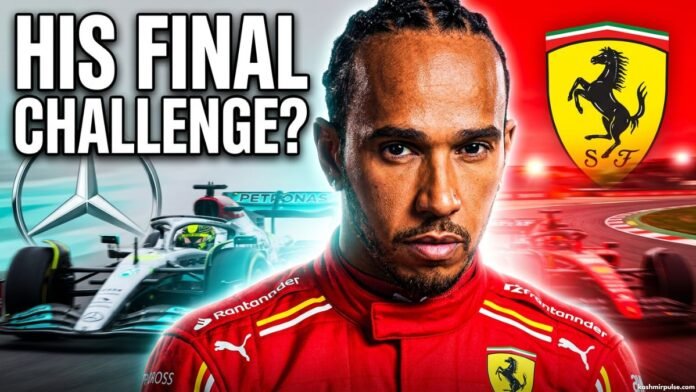

Seven world titles. A record haul of race wins. Nearly two decades at the top. Lewis Hamilton’s résumé barely needs an introduction at this point — but 2026 wrote a new chapter anyway, red overalls replacing silver, a season that opened shaky and turned into something closer to a comeback story. Motorsport betting platforms, DBbet among them, have watched the swing closely; championship odds around Hamilton moved hard once the Ferrari project started clicking.
What the Legacy Already Looks Like
Start with the numbers, because they’re absurd on their own. Most pole positions in F1 history, ahead of childhood hero Ayrton Senna. Most race wins, past Michael Schumacher. Seven titles, tied with Schumacher too. Most poles, most wins, joint-most championships — that trio of records puts Hamilton in GOAT arguments that used to belong almost exclusively to Schumacher and Juan Manuel Fangio, and not many drivers get to say that.
McLaren, then Mercedes, now Ferrari. Respect across the paddock came the hard way, earned rather than assumed, and it’s tangled up with an approach to the sport that never really fit the traditional mould — how a driver’s supposed to look, act, carry themselves publicly. Hamilton mostly ignored that mould, and somehow that refusal became part of the appeal rather than a liability, drawing in fans well outside the usual motorsport crowd along the way.
The McLaren years produced a rookie title challenge that came within a point of glory, followed eventually by a maiden championship. Mercedes brought six more titles across a decade of near-total dominance, along with the closest rivalries the sport has seen in a generation. Ferrari was always going to be different — smaller team culture, a fanbase with its own expectations, a history stretching back to the earliest days of the championship itself.
A Rough Start in Red
The Ferrari move carried enormous weight going in — seven-time champion, sport’s most storied team, expectations through the roof. Reality landed harder than the hype suggested it would. That first season in red turned into the only podium-less year of an 18-year career. Finished 86 points behind teammate Charles Leclerc. Frustration got public enough that Hamilton reportedly pushed the team toward reconsidering its driver approach at one point during 2025.
Timing explains part of it. No involvement in developing that 2025 car — arrived mid-cycle to something built without any input at all. Adapting to unfamiliar systems, unfamiliar engineers, an unfamiliar way of communicating feedback about a car’s balance — none of that happens overnight, even for a seven-time champion. The 2026 rules reset, smaller and nimbler machines, finally gave a real shot at shaping a Ferrari around personal preference. Changes followed, down to the race engineering staff.

Then 2026 Happened
Turnaround came quick. Two races into the season, the podium finish that eluded an entire previous year across two dozen tries. Qualifying pace flipped too — fractionally quicker than Leclerc across the early sessions, a stark contrast to running roughly two and a half tenths slower on average the year before. Small margins, but the kind of margins that separate pole from third on the grid.
Barcelona changed everything. Spain delivered Ferrari’s first win of the season and Hamilton’s first as a Ferrari driver, landing — fittingly enough — at the same circuit where Schumacher won his first race in red decades earlier. Career win number 106. Ferrari’s 249th constructor victory. Nearly a two-year gap since the previous win, closed with help from a well-timed virtual safety car that fell exactly when strategy needed it to.
Betting markets tracking title odds, wekawin included, logged sharp movement right after that Barcelona result — probability models shifting fast once the gap to the championship leader started closing. Forty-one points back of Mercedes’ Kimi Antonelli, with 15 races still left on a 22-race calendar.
Where Things Stand
Consistency mattered just as much as the one big result. Second in the championship through six rounds, built on back-to-back runner-up finishes before the win finally arrived. Fifteen points clear of Leclerc in the standings. A qualifying head-to-head that flipped completely from the previous year’s lopsided numbers — all of it pointing to something real shifting inside the team.
Barcelona wasn’t a one-off spike, either. Sixth podium in seven races for Ferrari at that stage, tied to upgrade work coming out of Maranello. By the British Grand Prix, the car had banked eight Grand Prix podiums across both drivers and two wins — Hamilton’s in Spain, Leclerc’s at home in Silverstone. Even sprint races contributed, four additional sprint podiums adding to the tally across the same stretch.


Nine races down: one win, five podiums, 147 points. Third in the championship. Not the lead, but miles ahead of where things sat 12 months earlier, and a position that suggests the rebuild is genuinely holding rather than fading once the novelty of early-season form wears off.
How Realistic Is the Title, Actually
An eighth championship would tie the all-time record outright, and that’s tempting to chase — but honesty matters more than hype here. A 66-point gap to Antonelli at one stage made a title run within 2026 look unlikely on paper. Even so, Hamilton wasn’t ready to close the door entirely, insisting nothing’s impossible once Barcelona flipped the season’s momentum.
Team boss Fred Vasseur deserves a chunk of credit — a relationship stretching back to a shared GP2 title in 2006. Hamilton pointed directly at Vasseur for backing requested changes after a brutal debut year, crediting the reliability and support that followed as the real foundation behind 2026’s turnaround. That kind of trust, built over two decades of overlapping careers, tends to matter more in moments of crisis than any single technical fix could.
What’s Still Left to Add
Set the title math aside for a second. The bigger picture around this Ferrari chapter looks far healthier than it did a year ago. Ferrari’s internal read, per Vasseur, is that something genuine shifted over the winter — visible in lap times even during that rough prior season, back when tiny margins meant more than the raw results let on. That distinction matters for how the comeback gets remembered: not a lucky bounce, but the product of groundwork laid quietly during the hardest stretch.
A seven-time champion chasing history at motorsport’s most iconic team — that’s one of F1’s biggest ongoing storylines no matter how 2026 finishes. Most wins, most poles, titles level with Schumacher — none of that’s going anywhere. What’s still open is whether a Ferrari championship joins that pile before the story wraps up. After a Barcelona result that reset the whole tone of the season, not many in the paddock are betting against it, and the remaining races look set to decide whether that optimism was justified or just a brief high point in a long career’s final act.