

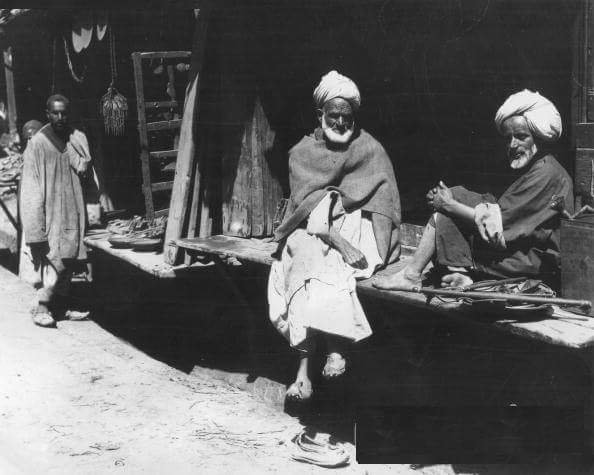
It is a fact that during the Sultanate period, there was an intercultural interface between outsiders and the natives of Kashmir.
Mohibbul Hassan in his book “Kashmir Under the Sultans” says, “The standard of culture in Kashmir during the Sultanate period was very high. At that time, there was general appreciation of arts, letters and music by the people of the Valley. The Kashmiris were extremely witty and intelligent and were always ready with some appropriate saying. They were very fond of music and possessed great artistic sense. They loved learning and as in olden days, they left their homes for distant in India, Turkistan and Persia to seek knowledge. The Sultans were not only patrons of art and culture, but some of them were themselves poets and musicians. Their courts were adorned with scholars, musicians and painters, while their capital Srinagar was embellished with magnificent palaces, mosques, monasteries and gardens.”
In this way, it becomes clear that both the outside influence and the ingenuity of the inhabitants of Kashmiris, gave birth to one of the standard cultures that we can think of. In the next lines, we will try to know it through different angles.
First is Persian influence. Due to this influence, Kashmir is called “Iran-e-Sageer” or “the lesser Iran”. Moreover, Iraq and its surrounding areas were the origin of civilization. Mesopotamia in Iraq, which lies between the Tigris and the Euphrates, was the first place in Central Asia that saw the dawn of civilization. In this regard, this area was the source of knowledge and cultural heritage. So, different people from this area left an indelible mark on the history of Kashmir. Among them, Sayyid Ali Hamdani and his son, Mir Muhammad Hamdani, are notable. It meant that apart from religious influence, they left their presence in the cultural domain as well.
Mohibbul Hassan says that the history of cultural relations between Kashmir and Persia goes back to ancient times. This is evident from the tiles of the Harvan Monastery near Srinagar and from the ancient sculptures of Kashmir, which bear unmistakably Sasanian or Iranian characteristics. Similarly, Sasanian influence can be detected in the use of official designations like ”Dibir” or “Divira” (after the Persian Dabir) and Ganjavara (after the Persian Ganjwar).
However, it is a fact that until the 14th century, the dominant trend in Kashmir had been Indian. When in 1339 CE, the Hindu rule came to an end and with the arrival of Shah Mir, Bulbul Shah, Rinchana, etc., that started the fusion of their culture with the native culture and resulted in Perso-Islamic culture. Nevertheless, the traces of the Indian culture remained for a long time.
There were many reasons why cultural contacts between Kashmir and Persia (Iran) during the Sultanate period became much closer than they had ever been before.

First, the progress of Islam in the Valley was intimately associated with the missionary activities of Sufi saints from Persia and Central Asia like Bulbul Shah, Sayyid Ali Hamdani, his son Muhammad Ali Hamdani, Mir Shams-Ud-Din and many others. These Sufis played an important role in bringing about an Iranian orientation of Kashmir’s culture.
Secondly, with the spread of Islam in Kashmir, it became natural for its Muslim inhabitants to look for their intellectual and spiritual inspiration to lands which had become centres of Islamic culture. In this way, scholars began to visit Herat, Samarqand, Bukhara, etc., which formed part of Persia’s cultural empire, to learn at the feet of eminent jurists and devout Sufis and drink deep from the fountain of Persian culture.
Third. From the reign of Shihab-Ud-Din, Persians and Persianized Turks, attracted by the patronage extended to them by the Sultans, began to enter Kashmir in increasingly large numbers. These men extended great influence on the social and cultural life of the people. The Valley had also close cultural relations with Hindustan, but the latter’s influence on her, during this period, appears to have been much less than that of Persia and Turkistan.
Second is Persian language. The contacts with Persia and Central Asia paved the way for the Persian Language. Sanskrit had been the court language under the Hindu kings and under the early Shah Mirs, but from the reign of Sultan Shihab-Ud-Din, it began to be replaced by Persian which became the language of the educated classes and even found its way into the villages.
Here, I would like to add my personal experience in this regard. At my home, we do have some rare Persian books, with Kashmiri side by side. These books are 60 or 70 years old. When one my ancestors, who originally belonged to the Central Asia, came from Khore Pattan to Hajibagh near Zainakote, as a ”Hakeem“ or a Muslim physician, he was expert, both in speaking and writing Persian. Today, I have those books but I can hardly read them.
Praising Persian, Hafiz Shirazi was right, when he said: ”The black-eyed beauties of Kashmir and the Turks of Samarqand sing and dance to the strains of Hafiz of Shiraz’s voice”.

The greatest contribution to the spread and development of Persian in Kashmir was made by Shahi Khan or Sultan Zain-Ul-Abideen, who ruled for almost 50 years, who himself was poet and author of two prose works in Persian. He made it the state language, patronized poets, scholars and encouraged the translation of historical and scientific works from Sanskrit into Persian. During his reign, a considerable amount of literature was produced in Persian. His son, Haider Shah, was also a poet and composed a book of songs. The next ruler, Hasan Shah, though not himself a poet, was a man of culture and patronized poets and learned men. The queens and the ladies of the upper classes, too, were not far behind in their zeal to promote learning.
During the Chak rule, Husain Shah was the most cultured man. He himself was a poet and was found of the society of poets and learned men. Mir Ali, a poet and a calligrapher, came from Persia during his reign and wrote a long poem in praise of Kashmir.
The most important poet who enjoyed Sultan Ali Shah’s patronage was Mulla Mehri. Muhammad Amin Mustaghni, a Kashmiri, was a courtier of Yousuf Shah and a good poet. Another poet connected with his court was Mirza Ali Khan.
Baba Talib Isfahani arrived in Kashmir during the reign of Ghazi Shah. He was a good poet and enjoyed the respect of all the Chak rulers.
However, the most outstanding poets and scholars of the Chak period were Baba Dawood Khaki and Sheikh Yaqoob Sarfi. He was the disciple of Sheikh Makhdum Hamza. He was a learned Sufi and his poetry is permeated with religious and mystical ideas. He was the author of a number of books like Dasturu’s-Salikin, Virdul-Muridin, Qasida-I-Jalaliyya and others.
Sheikh Yaqoob Sarfi was born in 1528 and died in 1594. He memorized the Quran at the age of seven and began to compose verses in Persian at the same time. He studied in Lahore, Sialkot, Samarqand, Mashhad, Mecca and Madina under renowned teachers. He wrote a commentary of al-Sahih of Bukhari and just before his death, he had nearly completed a commentary on the Quran.
Follow Us
The Kashmir Pulse is now on Google News. Subscribe our Telegram channel and Follow our WhatsApp channel for timely news updates!