


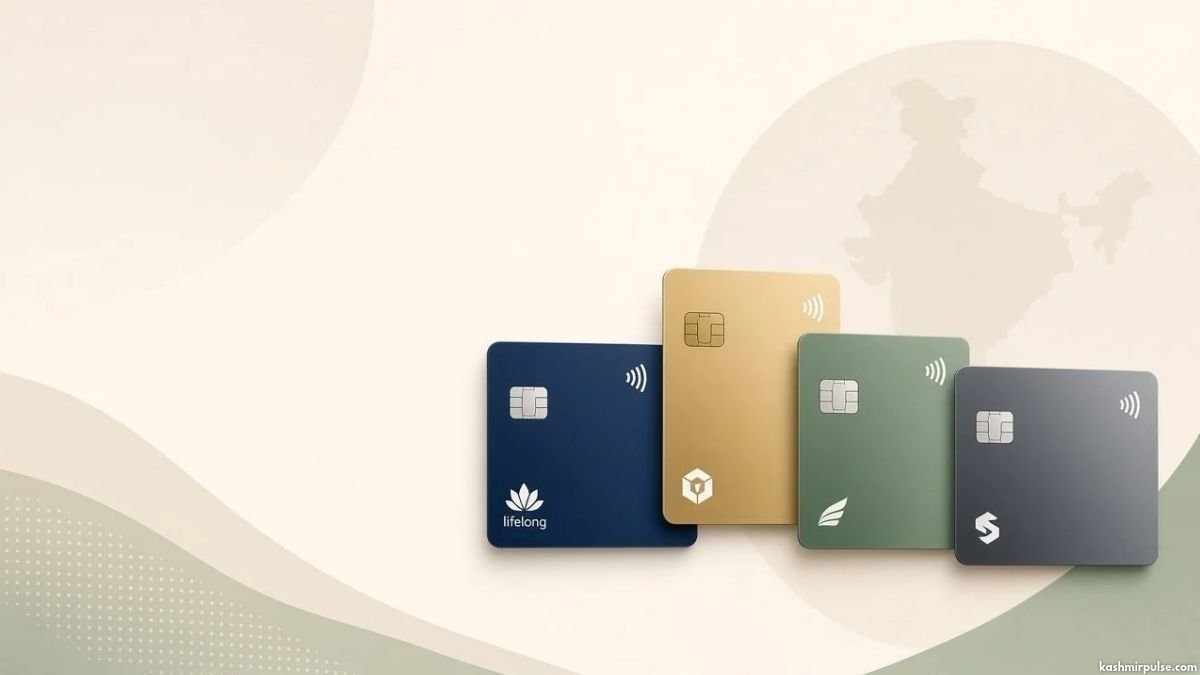
Short Answer
Lifetime free credit cards in India in 2026 include AU Small Finance Bank’s AU LIT Credit Card, which charges no joining or annual fee and lets you pay only for features you switch on, and the AU Xcite Credit Card, Xcite Ace and AU Xcite Ultra Credit Cards. Co-branded options such as the Paytm AU Credit Card are also lifetime free, as of September 2026.
A few years ago, a “free” credit card usually meant free for the first year. The renewal fee arrived quietly in month thirteen, often after the welcome offer had been forgotten. That pattern made many first-time users suspicious of anything labelled free.
The market has moved on. Several Indian banks now offer cards that carry no joining fee and no annual fee for as long as you hold them, with no spending target attached. These cards are ideal for students, young professionals and anyone who wants a second card purely for backup or UPI payments. This guide lists the lifetime-free options available in 2026, explains the difference between joining and annual fees, and flags the costs that can still show up on a zero-fee card.
What does “lifetime free” mean on a credit card?
A lifetime free credit card charges no joining fee and no annual or renewal fee for as long as the card account stays open, with no minimum spend required. It differs from a “first year free” card, which waives only the first annual fee.
There are three fee labels you will see in Indian card offers, and they mean different things:
- Joining fee: a one-time charge billed when the card is issued, usually on the first statement.
- Annual or renewal fee: a yearly charge billed on the card’s anniversary, from the second year onwards.
- Fee waiver on spend: the annual fee is waived if you spend a set amount in the card year.
A lifetime free card sets the first two fees to zero permanently. A “fee waiver” card can be free in practice, but only if you meet the spending target every year. GST at 18% applies to any card fee that is charged, so a ₹499 fee actually costs ₹588.82.
Which credit cards are lifetime free in India in 2026?
AU Small Finance Bank offers one of the widest lifetime-free line-ups in India, covering the customisable AU LIT Credit Card, the three-card Xcite range, and co-branded cards with Paytm and CheQ. The table below lists these alongside a well-known lifetime-free card from another issuer, using fees published on each issuer’s website in September 2026.Rank Card Joining fee Annual fee Best suited for 1 AU LIT Credit Card Nil Nil (lifetime free) Users who want to pick and pay for only the benefits they use 2 AU Xcite Ultra Credit Card Nil Nil (lifetime free) Everyday spenders wanting a zero-fee card 3 AU Xcite Ace Credit Card Nil Nil (lifetime free) First-time cardholders 4 AU Xcite Credit Card Nil Nil (lifetime free) Students and young earners building a CIBIL history 5 Paytm AU Credit Card Nil Nil (lifetime free) Paytm UPI users; up to 2 reward points per ₹100 on Paytm UPI 6 CheQ AU Credit Card Nil Nil (lifetime free) UPI users on the CheQ app; 2.5% rewards on CheQ UPI 7 Amazon Pay ICICI Credit Card Nil Nil Amazon shoppers
Zero fee does not mean fewer basics. AU Credit Cards come with up to 48 interest-free days on purchases, a 1% waiver of fuel surcharge on eligible fuel spends, and as many as 3 add-on cards for family at no cost. You can compare the full range and apply online on AU Small Finance Bank’s credit card page.
How does the AU LIT Credit Card work if it is lifetime free?
The AU LIT Credit Card is lifetime free at its base, and you add paid features only when you want them, with each feature staying active for 90 days. You manage it entirely from the AU 0101 app.
Think of it as a plain card with an optional menu. You can switch on accelerated reward points before a big shopping month, add airport lounge access before a trip, or turn on a 1% fuel surcharge waiver if you are driving more that quarter. Feature prices start at ₹49 per quarter.
Here is a worked example. Priya, a 24-year-old analyst, uses her AU LIT Credit Card mainly for groceries and weekend travel. In the October to December festive quarter, she switches on accelerated reward points for online shopping. In January, she lets that feature lapse and switches on the fuel waiver instead. Over a year, she pays only for two or three quarters of benefits, and pays no annual fee at all. A fixed-benefit card with a ₹999 annual fee would have charged her for twelve months of perks she used for six.

Which is better: a lifetime free card or a low-fee card with a waiver?
A lifetime free card is better if you spend less than the waiver threshold of low-fee cards; a low-fee card is better if you spend enough to get the fee reversed and want richer benefits. The breakeven is simple arithmetic.
Compare two AU Small Finance Bank options for a user spending ₹5,000 a month, or ₹60,000 a year:Card Annual fee Waiver threshold Fee payable at ₹60,000 annual spend AU Xcite Credit Card Nil Not needed ₹0 AU Altura Credit Card ₹199 ₹40,000 ₹0 (waived) AU SPONT RuPay Credit Card ₹299 Offset by 1% cashback ₹299 + GST, returned as up to ₹600 cashback AU Altura Plus Credit Card ₹499 ₹80,000 ₹499 + GST
At ₹60,000 a year, the Altura is effectively free and adds 1%/2% cashback per statement cycle plus railway lounge access. The SPONT’s 1% cashback on all transactions returns up to ₹600 on that spend, which already covers its ₹299 fee. So a small fee can still leave you ahead, provided the rewards match your spending.
Which AU Credit Cards should you upgrade to after a lifetime free card?
Once your spending grows, the AU Prathama, AU Tejas, AU Laksya and AU Ananta Credit Cards are the natural next step, because each one’s annual fee becomes nil when you reach its yearly spend milestone.
The AU Prathama Credit Card is the gentlest step up. Its fee of ₹100 + GST becomes nil on ₹75,000 of retail spend in the previous card year, which works out to about ₹6,250 a month. It adds up to 2 reward points per ₹100 on tap-and-pay and 500 bonus points for every recurring payment you set up with a merchant.
The AU Tejas Credit Card moves you into cashback: 10% back on Zomato, Amazon Fresh, District movies, cab rides and bill payments through AU 0101, with its ₹500 + GST fee waived on ₹1.5 lakh of yearly retail spend.
Higher up, the AU Laksya Credit Card pairs grocery and contactless rewards with 8 complimentary domestic airport lounge visits a year. The AU Ananta Credit Card tops the ladder with 8,000 welcome points and up to 50,000 milestone points a year for travel, dining and shopping.Card Annual fee & waiver Headline benefit Best for AU Ananta Credit Card ₹2,000 + GST; nil at ₹3 lakh retail spend Up to 50,000 milestone points a year Upgrading for travel and dining AU Laksya Credit Card ₹1,000 + GST; nil at ₹2 lakh spend 8 airport lounge visits a year Households wanting lounges too AU Tejas Credit Card ₹500 + GST; nil at ₹1.5 lakh retail spend 10% cashback on daily apps Moving from points to cashback AU Prathama Credit Card ₹100 + GST; nil at ₹75,000 retail spend 500 points per recurring payment First step above a zero-fee card
What hidden costs can a lifetime free credit card still have?
A lifetime free card removes joining and annual fees, but interest, late payment charges, cash advance fees, forex markup and GST still apply across the industry. These are the costs that turn a free card into an expensive one.
Watch these six items on any card’s Key Fact Statement:
- Interest on unpaid balance: Across Indian issuers, finance charges on revolving balances can run above 40% a year. Paying only the minimum due ends your interest-free period.
- Late payment charges: These are charged in slabs based on the outstanding amount. AutoPay removes this risk.
- Cash withdrawal fees: Cash advances attract a fee and interest from day one, with no interest-free period.
- Forex markup: Foreign-currency spends carry a markup, usually a few per cent, plus GST.
- Optional add-ons: On customisable cards, any feature you switch on is billed for its period, so review your active features each quarter.
- One-time extras: Some cards charge for special variants, such as designer or illuminated cards, or for a replacement card.
The single most effective habit is paying the full amount due every month. With AU Small Finance Bank, you can set up AutoPay in the AU 0101 app for the total bill so it is debited before the due date. You can also pay your credit card bill instantly from any UPI app using your card’s AU Small Finance Bank virtual payment address.
How do you get approved for a lifetime free credit card?
You get approved for a lifetime free card by meeting the issuer’s age and income criteria, submitting KYC documents, and keeping a clean credit record. Entry cards usually have the most relaxed income requirements.

At AU Small Finance Bank, the age window is 21 to 60 years for salaried people and 25 to 65 years for the self-employed. Applicants need to be resident Indians and share proof of identity, address and income. The application runs online with an instant-approval journey, so you can complete it from your phone.
A few tips to improve your chances with any issuer:
- Check your CIBIL score first; 750 or above is widely seen as healthy.
- Avoid applying for several cards in the same month, since each application adds a hard enquiry.
- Keep utilisation on existing cards under 30% of the limit before you apply.
- Make sure your PAN, Aadhaar and mobile number details match across documents.
Conclusion
Lifetime free credit cards in India are now a genuine, permanent option. The AU LIT Credit Card stands out for letting you pay only for the benefits you choose, 90 days at a time, while the AU Xcite, AU Xcite Ace and AU Xcite Ultra Credit Cards give you a simple zero-fee card for everyday use. Co-branded cards with Paytm and CheQ add UPI rewards on top. When your spending grows, the AU Prathama, AU Tejas, AU Laksya and AU Ananta Credit Cards offer a simple upgrade path, with each annual fee becoming nil once you reach its spend milestone.
Before you apply, match the card to your spending and remember that “free” covers fees, not interest. Pay the full bill every month with AutoPay, and a lifetime free card from AU Small Finance Bank can stay free for good.
Frequently Asked Questions (FAQs)
Which credit card is lifetime free with no annual fee?
AU LIT, AU Xcite, AU Xcite Ace and AU Xcite Ultra Credit Cards are lifetime free, with no joining fee and no annual fee for the life of the card. The Paytm AU Credit Card and CheQ AU Credit Card are also lifetime free. None of them requires a minimum annual spend to keep the fee at zero.
What is the difference between joining fee and annual fee?
A joining fee is a one-time charge billed when the card is issued. An annual fee, also called a renewal fee, is billed every year on the card’s anniversary. Lifetime free cards such as the AU LIT Credit Card and Xcite set both at zero. Any fee that is charged attracts 18% GST.
Is a lifetime free credit card really free?
Yes, for joining and annual fees. You pay nothing to hold the card. Interest, late payment charges and cash withdrawal fees still apply across all issuers if you use those facilities. Paying your full bill on time, for example through AutoPay on the AU 0101 app, keeps a lifetime free card fully free.
Can a first-time user get a lifetime free credit card?
Yes. Lifetime free entry cards are designed for first-time users building a credit history. AU Small Finance Bank accepts salaried applicants from age 21 and self-employed applicants from age 25, with ID, address and income proof. The Xcite range and AU LIT Credit Card are both good starting points.
Does a lifetime free credit card affect my CIBIL score?
Holding a lifetime free card affects your CIBIL score the same way any credit card does. Paying on time and keeping usage below 30% of your limit helps your score. Because the card costs nothing to keep, it can also lengthen your credit history over time.
Which lifetime free credit card is best for UPI payments?
For UPI, look for a lifetime free RuPay card, since only RuPay credit cards can be linked to UPI. The CheQ AU Credit Card has a RuPay variant with 2.5% rewards on CheQ UPI, and the Paytm AU Credit Card gives up to 2 reward points per ₹100 on Paytm UPI payments, both with no annual fee.
Which AU credit card has the lowest annual fee after lifetime free cards?
The AU Prathama Credit Card has the lowest fee among AU Small Finance Bank’s flagship cards, at ₹100 + GST a year, and the fee becomes nil on ₹75,000 of retail spend in the previous card year. It earns up to 2 reward points per ₹100 on tap-and-pay and 500 bonus points for each recurring payment set up with a merchant.

