

SRINAGAR — Chairman of the JK Peace Forum and socio-political activist Satish Mahaldar has appealed to six major political formations in Jammu and Kashmir, along with former Srinagar MP Aga Syed Ruhullah Mehdi, to build a collective consensus in support of a credible Kashmiri Pandit candidate for the forthcoming Srinagar Parliamentary by-election.
In his appeal, Mahaldar urged the Jammu and Kashmir National Conference (JKNC), Peoples Democratic Party (PDP), Congress, Peoples Conference, Apni Party and Bharatiya Janata Party (BJP) to rise above partisan considerations and support the candidature of an educated, accomplished and politically competent Kashmiri Pandit.
He clarified that the proposal was not a demand for political patronage, communal entitlement or preferential treatment, but an appeal for democratic inclusion and meaningful representation of a community that has experienced prolonged displacement and marginalisation for more than three decades.
Referring to the 36-year experience of displacement, insecurity and political estrangement faced by Kashmiri Pandits, Mahaldar questioned the sincerity of repeated political assurances regarding their dignified return and rehabilitation.
He said the forthcoming by-election offered an opportunity for political parties to translate their commitments into meaningful action.
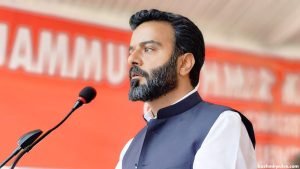
“If political formations genuinely subscribe to Kashmir’s composite ethos, why should they recoil from extending an opportunity to a Kashmiri Pandit to represent Srinagar in Parliament?” he questioned.
Mahaldar argued that such representation would extend beyond community-specific concerns and provide a broader democratic platform to raise issues affecting all sections of Kashmiri society.
These include unemployment, economic deprivation, educational advancement, healthcare infrastructure, tourism, social equity and constitutional dignity.
Highlighting the historical, intellectual and spiritual contributions of Kashmiri Pandits to the Valley’s cultural heritage, he said their meaningful participation in public affairs was important for preserving Kashmir’s pluralistic traditions and syncretic legacy, historically associated with Sharda Desh.
Extending his appeal beyond political parties, Mahaldar urged civil society organisations, academicians, intellectuals, religious representatives, business organisations and youth forums to support the initiative.

He said reconciliation and the restoration of mutual confidence required a collective commitment that transcended political and organisational affiliations.
Mahaldar challenged the six political formations to demonstrate their commitment to the displaced community through concrete political action rather than recurring assurances and symbolic statements.
He maintained that a consensus in support of a deserving Kashmiri Pandit candidate could serve as a confidence-building initiative and help bridge socio-political divisions that have persisted since 1989.
“Let Srinagar convey an unequivocal message that Kashmir’s future cannot be constructed by excluding any constituent of its history, heritage or people,” he said.
He concluded by advocating a collective vision based on “One Kashmir, Shared Civilisation, Equal Dignity and Inclusive Democracy.”

