


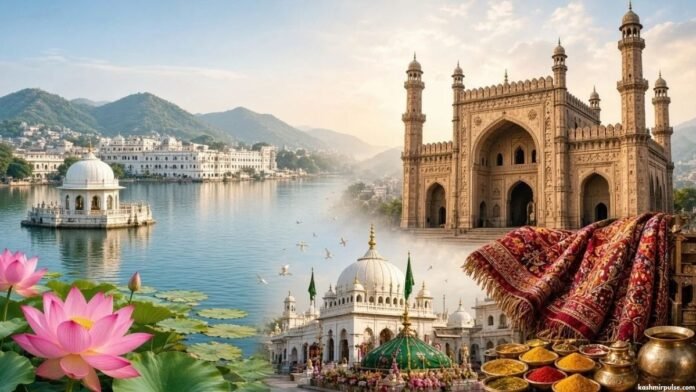
Ajmer is a city where everyday Rajasthan, spirituality, and history converge. Nestled against the Aravalli Hills, it has been a major pilgrimage site for centuries, and layers of local history can be seen in its forts, lakes, and ancient markets.
There is a lot to discover in Ajmer, whether you are visiting for religious purposes or just want to learn more about Rajasthan outside of its more well-known cities. It is also easy to combine with neighbouring Pushkar due to its small sightseeing circuit.
Begin with the Sacred Dargah Sharif
The most well-known religious site in Ajmer is the Sharif Dargah. The shrine, which honours the revered Sufi saint Khwaja Moinuddin Chishti, draws pilgrims from many religions all year long.
Each of the complex’s many courtyards, gateways, and historic buildings has a distinct personality. Particularly during religious events, visitors should be ready for crowds, dress modestly, and observe the site’s customs.
Shops selling flowers, chadars, traditional sweets and souvenirs line the narrow lanes surrounding the dargah, providing a window into the city’s dynamic pilgrimage culture.
Discover the Historic Adhai Din Ka Jhonpra
Adhai Din Ka Jhonpra, an architectural icon renowned for its elaborate arches, carved pillars, and unique Indo-Islamic character, is located a short distance from the dargah.
The building has a complicated past and is thought to have evolved from a previous Sanskrit college and temple complex before undergoing changes in the early Sultanate era. The stonework that has survived shows how medieval Ajmer’s architectural traditions changed over time.
Instead of just using it as a quick photo opportunity, take the time to study the intricate carvings.
Visit the Impressive Ajmer Sharif Area and Akbari Fort
Another viewpoint on the history of the city can be found at the Akbari Fort, also called the Ajmer Government Museum. Constructed during the Mughal era, the fort was connected to Emperor Akbar and subsequently developed into a significant military and administrative location.
The museum currently has collections of historical artefacts, weapons, sculptures, and stone inscriptions.
Relax beside Ana Sagar Lake
Visit Ana Sagar Lake, one of Ajmer’s most famous sites, for a more leisurely and serene portion of the day. Prithviraj Chauhan’s grandfather, Arnoraja, built this man-made lake in the twelfth century, and it remains a popular recreational area in the city.
The Aravalli Hills are beautifully visible from the lake, which is surrounded by landscaped areas. Walking along the waterfront is a great way for visitors to take a break from sightseeing or to enjoy the open surroundings. Around sunset, when the shifting light creates lovely reflections across the water, the area becomes especially welcoming.
A Glimpse of Taragarh Fort
Taragarh Fort, a significant reminder of the city’s strategic past, is perched on a hill with a view of Ajmer. Built in a commanding position, the fort dates back to the Chauhan period and was once crucial to the region’s defence.
A large portion of the fort is now in ruins, with gateways, weathered walls, and ruins of its old buildings strewn all over the hillside. While the site’s elevated location offers expansive views over the city and surrounding landscape, exploring it offers a different experience than Ajmer’s religious landmarks.
Comfortable shoes are advised because the approach may involve uneven paths. Additionally, it is worthwhile to bring water, especially when travelling in the warmer months.
Explore the Marble Craft and Local Markets
The markets in Ajmer offer a more typical view of the city. You can find textiles, handicrafts, jewellery, religious objects, and traditional Rajasthani goods in the vicinity of the dargah and older commercial areas.
The city is also well-known for its locally made goods and marble work. Smaller stores frequently engage in bargaining, but before making a purchase, it’s worthwhile to compare prices and quality.
Another significant aspect of exploring Ajmer is the cuisine. Savour regional kachoris, samosas, candies, and Rajasthani dishes while keeping in mind that bustling restaurants with a high local turnover can frequently be a helpful indicator of freshness.
Make Time for Nareli Jain Temple
Nareli Jain Temple is a contemporary religious complex with a unique marble architecture that is situated on the outskirts of Ajmer. It distinguishes itself from the city’s older monuments by fusing traditional Jain design with a stately modern appearance.
The complex provides a tranquil setting away from the bustling city centre, set against the Aravalli landscape. Both pilgrims and lovers of architecture are drawn to its intricate carvings, symmetrical structures, and high location.
If you have time, explore the outskirts of Ajmer while visiting Nareli to get a different perspective on the religious and cultural nature of the city.

Take a Short Trip to Pushkar
Ajmer and Pushkar can be combined into a single itinerary due to their close proximity. Pushkar is well-known for its Brahma Temple, sacred lake, and vibrant streets lined with shops selling handicrafts, cafés, and little shrines.
Part of what makes the two locations appealing is how different they are. While Pushkar has a more bohemian visitor scene and a distinctly Hindu pilgrimage atmosphere, Ajmer offers a strong Sufi and Mughal heritage.
Depending on their schedule, travellers can spend a morning in Ajmer, proceed to Pushkar, and then return to Ajmer.
Experience Ajmer Beyond the Main Attractions
Walking through the older neighbourhoods, taking in the sounds and smells of the markets, and seeing how pilgrims, locals, and shopkeepers share the same streets are the best ways to learn about Ajmer.
Because of the more comfortable temperatures and potentially less crowded major religious sites, early mornings can be especially fulfilling.
Where to Stay While Exploring Ajmer
If you intend to visit both Ajmer and Pushkar, picking lodging near major thoroughfares and transportation hubs can facilitate sightseeing. Thanks to hotels in and around Ajmer, travellers can stay close to the city while still having easy access to its attractions.
Treebo’s app can be helpful for travellers who prefer to book lodging online in order to manage reservations and check available stays while making travel plans. Checking the location and amenities before making a reservation, as with any hotel, helps guarantee that the stay fits your schedule.
Plan Your Ajmer Visit
The best way to experience Ajmer is to go slowly. Instead of attempting to see everything in a few hours, allow ample time for its markets, lakefront, historic buildings, and religious sites.
When visiting places of worship, observe local customs, dress appropriately, and be flexible with your schedule to accommodate crowds or shifting hours. For a more comprehensive introduction to Rajasthan’s spiritual and cultural traditions, try combining Ajmer and Pushkar.
Ajmer offers much more than a typical tourist destination with its blend of faith, architecture, history, and local life. There, the rhythms of contemporary Rajasthan are still intimately linked to centuries-old customs.